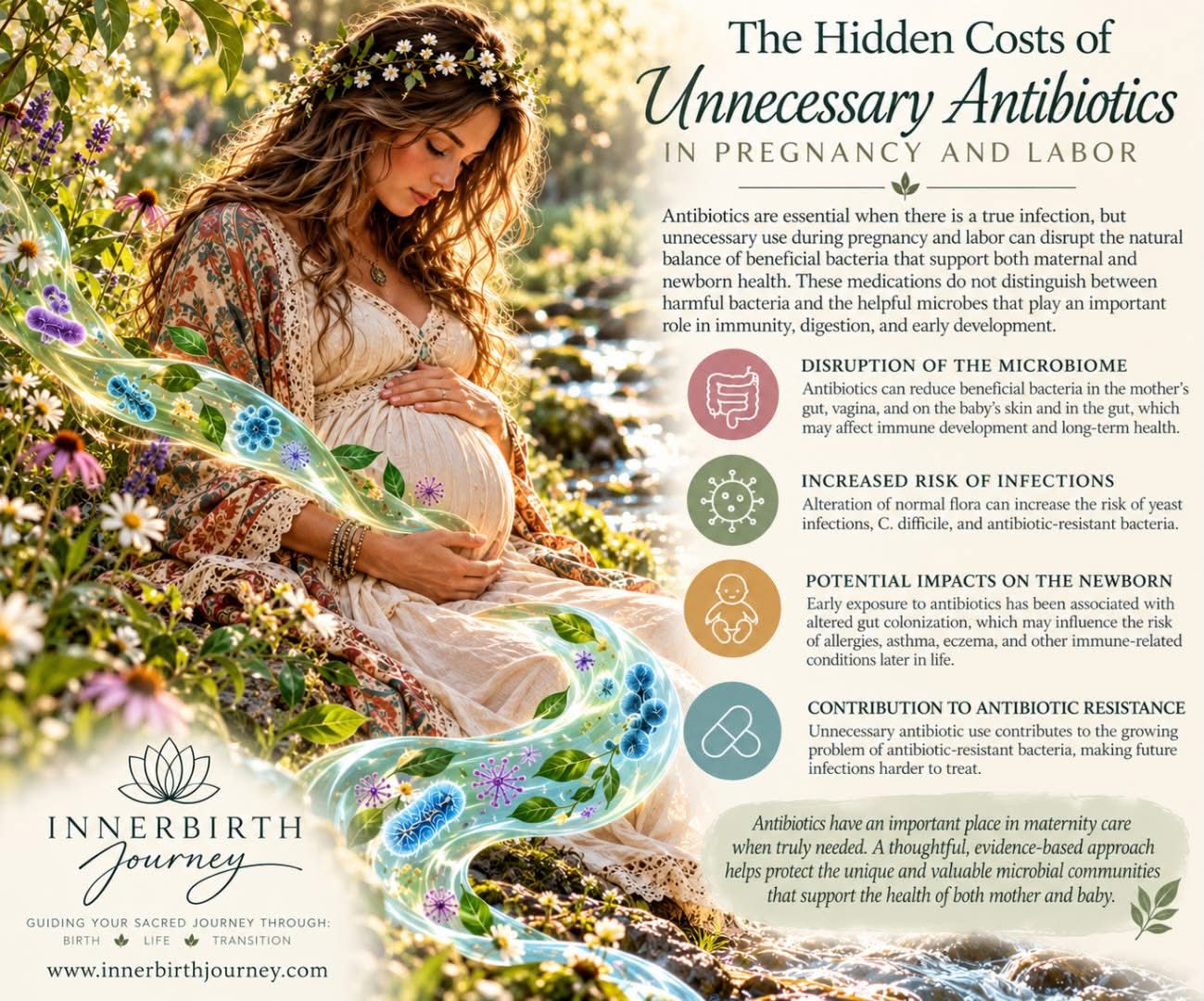
Antibiotics have an important place in maternity care, and when there is a true infection they can be life-saving. But when they’re used without a clear need, they can disrupt the natural balance of beneficial bacteria that support both mother and newborn.
Antibiotics don’t distinguish between harmful bacteria and the helpful microbes that play a role in immunity, digestion, and early development. That’s why I believe in a thoughtful, evidence-based approach.
Disruption of the microbiome
Antibiotics can reduce beneficial bacteria in the mother’s gut and vagina, and on and in the baby, which may affect immune development and long-term health.
Increased risk of other infections
Changing the body’s normal flora can raise the risk of yeast infections, C. difficile, and antibiotic-resistant bacteria.
Potential impacts on the newborn
Early antibiotic exposure has been associated with altered gut colonization, which researchers are studying for links to allergies, asthma, eczema, and other immune-related conditions later in life.
Contribution to antibiotic resistance
Unnecessary use contributes to the growing problem of resistant bacteria, making future infections harder to treat for everyone.
Protecting the unique microbial communities that support mother and baby is part of honoring the journey.

Certified Nurse Midwife, herbalist, and founder of InnerBirth Journey. About Lorie →
This article is for education and encouragement and is not a substitute for individualized medical care. Please talk with your own midwife or provider about your health and your baby’s.